The short version
Buying crypto at a Japanese exchange is a two-step process: put yen into your exchange account, then buy. How you get the yen in is where costs, delays and frustrations hide. There are six ways to do it, and each exchange supports a different mix.
If you have online banking with one of the partner banks, an instant deposit即時入金 (sokuji nyukin): you approve a payment in your online bank from the exchange app and the yen lands in minutes. Some exchanges call it quick deposit. is free and lands in minutes. If you don't, a convenience store works but costs real money on small amounts. PayPay and loyalty points are Japan-specific shortcuts with their own guides. Credit cards, the default in most countries, are the odd one out.
Everything below assumes you live in Japan, hold a residence card and have a Japanese bank account in your own name. Visitors should skip to the section for tourists.
Which exchange takes which payment method
This matrix comes from each exchange's official fee and deposit pages. bitFlyer and Rakuten Wallet block access from our research environment, so their rows rely on archived copies of the official pages. A dash means we found no such option.
| Exchange | Instant / quick deposit | Konbini / Pay-easy | Bank transfer |
|---|---|---|---|
| CEX.IO | — | No konbini | No Japanese bank transfer (free SEPA, $0 ACH); Visa/Mastercard, Apple Pay, Google Pay. International platform; not FSA-registered, no yen, not available to Japan residents |
| GMO Coin | Free from Docomo SMTB Net Bank, PayPay Bank, Japan Post Bank (¥1,000 to ¥10m) | Pay-easy from MUFG, SMBC, Mizuho, Resona (7-day send lock). No konbini | Free and instant from GMO Aozora and Rakuten Bank; others pay their bank fee |
| Coincheck | Quick deposit via Pay-easy: ¥770 to ¥1,018, or 0.11% + ¥495 from ¥500,000 | Konbini: ¥770 under ¥30,000; ¥1,018 up to ¥300,000 | Free at Coincheck; you pay your bank fee |
| bitFlyer | Quick deposit free from Sumishin SBI (now Docomo SMTB), ¥330 from others; 7-day lock (archived page) | Konbini option shown; fee not confirmed | Your bank fee |
| SBI VC Trade | Free quick deposit via Pay-easy or net banking, from ¥1,000 | No konbini | Not confirmed on the official page |
| BitTrade | Free from Docomo SMTB, PayPay Bank, AEON Bank, Minna no Ginko | Konbini / Pay-easy: ¥695 to ¥1,005 | Your bank fee |
| Zaif | — | Konbini / Pay-easy: ¥495 under ¥30,000, ¥605 above (+¥200 stamp from ¥50,000) | Your bank fee; card only for auto-buy (3.5%) |
| bitbank | — (transfers with your 9-digit deposit number land instantly) | No konbini | To GMO Aozora or Docomo SMTB; your bank fee |
| Binance Japan | PayPay Money: free when paying at purchase, ¥110 to pre-fund | No konbini | To GMO Aozora or Docomo SMTB |
| Rakuten Wallet | Real-time from Rakuten Bank, free from ¥1,000 (archived page); Rakuten Points | No konbini | From other banks to your Rakuten Bank deposit account |
The pattern is clear. GMO Coin wins on free instant deposits, including from Japan Post Bank, which is handy if that's the account you opened when you arrived. Coincheck is the big name that takes konbini cash. Binance Japan is the PayPay exchange, Rakuten Wallet works with Rakuten Bank and Rakuten Points, and Mercoin runs on your Mercari balance. For trading and withdrawal costs on top of deposits, see the fee comparison; for opening an account from scratch, the step-by-step buying guide.
Instant bank deposits: the cheapest way in
With an instant deposit you tap "deposit" in the exchange app, get bounced to your online bank, approve the payment and see the yen arrive a few minutes later. There's no transfer form to fill in, so no risk of typing the wrong account number or name.
Free combinations are limited. GMO Coin takes free instant deposits from Docomo SMTB Net Bank (formerly Sumishin SBI Net Bank), PayPay Bank and Japan Post Bank, from ¥1,000 up to ¥10 million. BitTrade does the same from Docomo SMTB, PayPay Bank, AEON Bank and Minna no Ginko. SBI VC Trade offers free quick deposits through Pay-easyペイジー: Japan's bill-payment network, used for taxes and utilities. Some exchanges accept it for deposits from online banking or ATMs. and net banking. Rakuten Wallet took free real-time deposits from a linked Rakuten Bank account, according to its archived fee page.
The catch is the holding periodA period after a deposit during which crypto bought with that money can't be sent to another exchange or wallet. It exists to slow down fraud.. GMO Coin locks outgoing transfers for 7 days after a Pay-easy deposit, and bitFlyer locked quick-deposit funds for 7 days per its archived page. You can still buy and sell inside the exchange; you just can't move the coins to your own wallet straight away. On 6 August 2026 the FSA and the National Police Agency asked the crypto industry to adopt holding periods after deposits and purchases as an anti-fraud measure, so expect more of these.
Bank transfers and the name-matching rule
Every exchange accepts a plain bank transfer (furikomi). bitbank, OKJ and Binance Japan give you a personal deposit account at GMO Aozora Net Bank or Docomo SMTB Net Bank; bitbank credits transfers instantly when you include your 9-digit deposit number. The exchange charges nothing, but your own bank charges its usual transfer fee, so an online bank with a few free transfers a month makes this effectively free.
The rule that catches newcomers: the money must come from an account in your own name, and the sender name on the transfer must match the name on your exchange account. For foreign residents, that means the katakana or romaji name on your bank account. If your bank, residence card and exchange profile write your name differently, fix that before your first deposit.
Banks now enforce this from their side too. Following FSA and police requests, several banks block transfers to crypto exchanges when the sender name differs from the account holder. The Bank of Yokohama applies it to exchanges and money-transfer providers; Hokkaido Bank started in February 2025 and widened it on 18 May 2026; 77 Bank, Ryukyu Bank and Hiroshima Bank have similar notices. Adding the exchange's customer number before or after your name is generally allowed. Japan Post Bank announced on 13 January 2026 that it may restrict accounts after a suspicious transfer to a crypto exchange.
Banking with a regional bank?
No regional bank appears on GMO Coin's instant-deposit list. From a regional bank you'll pay a normal transfer fee and wait for the transfer. Opening an online bank or Japan Post Bank account just for exchange deposits saves money over time. Our city guides for Yokohama and Sapporo and Hokkaido cover the local bank rules.
Paying cash at a konbini
No online banking, or prefer to pay cash? Coincheck, BitTrade and Zaif let you deposit at a convenience store. You start a deposit in the app, receive a payment number, pay the cash at the store and the yen appears in your exchange account. bitFlyer shows a konbini option too, but we couldn't confirm its fee.
Konbini fees are flat per payment, so small deposits are expensive. Here is what each fee works out to as a share of the deposit, calculated from the official fee tables:
| Deposit | Coincheck | BitTrade | Zaif |
|---|---|---|---|
| ¥10,000 | ¥770 (7.7%) | ¥695 (≈7.0%) | ¥495 (≈5.0%) |
| ¥30,000 | ¥1,018 (≈3.4%) | ¥805 (≈2.7%) | ¥605 (≈2.0%) |
| ¥50,000 | ¥1,018 (≈2.0%) | ¥1,005 (≈2.0%) | ¥805 (≈1.6%) incl. ¥200 stamp |
| ¥100,000 | ¥1,018 (≈1.0%) | ¥1,005 (≈1.0%) | ¥805 (≈0.8%) incl. stamp |
A ¥10,000 konbini deposit loses 5% to 8% before you buy anything, and the dealer desk販売所 (hanbaijo): you buy from the exchange at a quoted price. Easy, but the quoted price includes a markup called the spread. spread comes on top. If konbini is your route, save up and deposit less often. Coincheck's table suggests a ¥300,000 cap per payment, and Zaif adds a ¥200 revenue stamp from ¥50,000. Check each exchange's help page for which convenience store chains and daily limits apply.
Can you buy crypto with a credit card in Japan?
Short answer for residents: not at a Japanese exchange. None of the FSA-registered exchanges we checked lists credit cards as a deposit or purchase method. Coincheck's fee table has no card option, and neither do the official pages of GMO Coin, bitbank, SBI VC Trade or Binance Japan. The single exception is Zaif, which takes cards only for its auto-buy plan積立 (tsumitate): an automatic plan that buys a fixed yen amount daily or monthly, also called dollar-cost averaging., at a 3.5% fee.
We found no exchange that explains the reason officially, and it isn't a blanket legal ban. Card payments can be reversed through a chargebackA card issuer pulling back a payment from the merchant, usually after a cardholder dispute., and crypto bought with a stolen card can be sent away within minutes, which makes cards a risky way to fund crypto for any business. The accurate takeaway: Japanese exchanges simply don't offer it.
If you want your card spending to turn into crypto, Japan now has several credit cards that pay rewards in coins: the Binance Japan Card (JCB, 1.6% back in BNB), the EPOS card for bitbank, the SBI VISA crypto card and the bitFlyer credit card. We compare them in crypto cards in Japan.
PayPay Money via Binance Japan
Since 21 November 2025 you can buy crypto on Binance Japan's dealer desk with PayPay Money or PayPay Points, from ¥1,000, with no fee when you pay at the moment of purchase. Since 9 April 2026 you can also pre-fund your Binance Japan account from PayPay for ¥110 and use that yen on the order book. PayPay owns 40% of Binance Japan.
Only verified PayPay Money and regular points work. PayPay Money LitePayPay balance charged by credit card, carrier billing, or before identity verification. It can be spent but not sent to a bank. and limited-time points don't. Linking steps, limits and the residence-card catch are in our guide to buying crypto with PayPay.
Loyalty points
Japan's point programmes double as a cash-free on-ramp. Rakuten Points buy crypto on Rakuten Wallet at 1 point = ¥1 from 100 points; Mercari points work on Mercoin from ¥1; Ponta points go into au PAY's αU wallet (up to 300 a month); Saison's Eikyu Fumetsu points convert at Coincheck; Orico and Aplus points at SBI VC Trade. We found no route for dPoint. Conversion is one-way. Rates and tax notes are in buying crypto with points.
Visitors without a residence card
Japanese exchanges verify a residence card or other Japanese ID and a Japanese address, so short-term visitors can't open an account, and none of the methods above is open to them. Visitors usually keep using the exchange they use at home.
Another option is an international platform that takes foreign cards. CEX.IO, for example, holds a US FinCEN money services business registration and state money transmitter licences, is registered with the UK FCA as a cryptoasset business, and accepts Visa, Mastercard, Apple Pay and Google Pay. It is not registered with Japan's FSA, doesn't support yen, and lists Japan among its unsupported countries, so it is for non-residents only. Read the platform's own terms for where you live before signing up.
For cash, a few bitcoin ATMs run by Gaia operate in Tokyo's Akihabara area and in Osaka; see crypto ATMs in Japan for locations and status. If anyone asks you to feed cash into a crypto ATM on their behalf, it's a scam. Longer-term residents should read our guide for foreigners in Japan.
Which method should you use?
- Lowest cost: instant deposit to GMO Coin from Japan Post Bank, PayPay Bank or Docomo SMTB Net Bank
- No online banking: konbini deposit at Coincheck, BitTrade or Zaif, in as few payments as possible
- Lives in PayPay: buy on Binance Japan with PayPay Money from ¥1,000
- Sitting on points: Rakuten Points at Rakuten Wallet, Mercari points at Mercoin
- Want coins in your own wallet fast: avoid methods with a 7-day holding period, or plan around it
- Regional bank customer: transfer in your own name, or open an online bank account for deposits
Whatever you choose, use your own money, in your own name, at a registered exchange. Anyone on social media offering to "buy for you" if you transfer yen to their account is running a scam; see crypto scams in Japan. For the bigger picture on choosing an exchange, start with our guide to buying crypto in Japan.
Paying for crypto in Japan: FAQ
Can I buy crypto with a credit card in Japan?
Not at FSA-registered domestic exchanges, which don’t offer card deposits. The only exception we found is Zaif’s card payment for its auto-buy plan, at a 3.5% fee. Residents who want to use a card can pick a credit card that pays rewards in bitcoin or BNB instead.
Can I buy bitcoin at a 7-Eleven or other konbini?
You can’t buy crypto at the till, but Coincheck, BitTrade and Zaif let you pay yen into your exchange account at a convenience store. You start the deposit in the app, pay at the store and the yen appears in your account. Fees run from ¥495 to ¥1,018 per payment, so batch small amounts together.
Can I use my foreign bank account or Wise card to fund a Japanese exchange?
Japanese exchanges list the specific banks and methods they accept, and deposits must come from an account in your own name. Foreign cards are not on any list we checked. Fund your account from a Japanese bank account in your name, and check the exchange’s help page before trying anything else.
Why can’t I send my coins out right after an instant deposit?
Some funding methods carry a holding period. GMO Coin’s Pay-easy deposits and bitFlyer’s quick deposits lock crypto bought with that money for 7 days. In August 2026 the FSA and National Police Agency asked the industry to apply such holding periods more widely to fight fraud.
Can a tourist buy crypto in Japan?
Not through a Japanese exchange, which needs a residence card and a Japanese address. Visitors usually keep using the platform they use at home, or an international platform that accepts foreign cards. A handful of bitcoin ATMs operate in Tokyo and Osaka.
Which deposit method is free?
Instant deposits are free at GMO Coin from Docomo SMTB Net Bank, PayPay Bank and Japan Post Bank, at BitTrade from four online banks, at SBI VC Trade via quick deposit, and at Rakuten Wallet from Rakuten Bank. Ordinary bank transfers are free on the exchange side, but your bank charges its own transfer fee.
Sources
- Coincheck fee list (Japanese)
- GMO Coin: deposits and withdrawals (Japanese)
- BitTrade help centre: konbini deposits (Japanese)
- Zaif fees (Japanese)
- Bank of Yokohama: transfers to crypto exchanges (Japanese)
- FSA: anti-fraud request to the crypto industry, 6 August 2026
- PayPay notice: PayPay balance on Binance Japan (Japanese)
- CEX.IO: limits and commissions
Keep reading
Buy crypto with PayPay
How the PayPay × Binance Japan link actually works
Read more →
Buy crypto with points
Rakuten, Ponta, PayPay and more compared
Read more →
Crypto cards in Japan
Cards that earn crypto vs cards that spend it
Read more →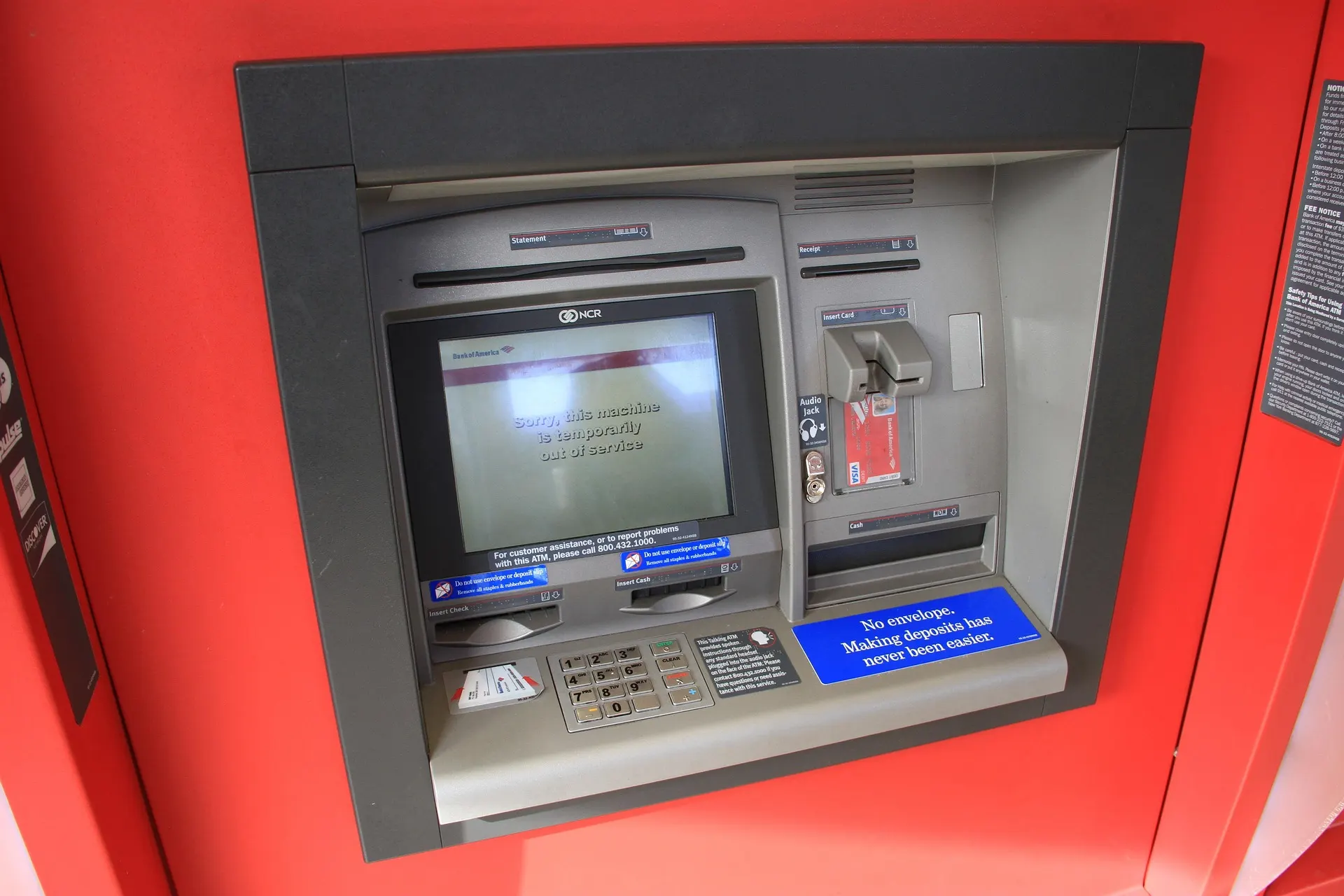
Crypto ATMs in Japan
Where the real machines are and how they work
Read more →
Crypto for foreigners in Japan
Visas, residence cards, US persons and tourists
Read more →
Exchange fees compared
Maker/taker, spreads, deposits and withdrawals side by side
Read more →