The reality check: what Nagoya has, and what it doesn't
We checked the usual places and found very little. None of Japan's 27 FSA-registered exchanges is based in Chubu; all are in Tokyo or Osaka. There is no crypto ATM we could confirm in Aichi. BTC Map, the community map of bitcoin-accepting businesses, has zero entries for the prefecture. We found no Web3 programme run by Aichi Prefecture or Nagoya City, and no crypto meetup in Nagoya on Connpass, Luma or Meetup in 2025 or 2026. STATION Ai, the large start-up hub that opened in Showa ward in October 2024, has no Web3-specific programme that we could find either.
None of that stops you from buying. Japanese exchanges run fully online, so a Nagoya resident pays the same fees and gets the same service as someone in Shibuya. What does differ is local: which bank you send yen from, which tax bureau you file under, and, for the many foreign residents here, getting the name and paperwork details right. And outside Aichi, the Chubu and Hokuriku region has some of Japan's best-known municipal Web3 experiments.
Map: svg-maps/japan, CC BY 4.0
- Covers
- Aichi, Gifu, Mie, Shizuoka, Nagano, Yamanashi, Niigata, Toyama, Ishikawa, Fukui
- Exchange offices
- None
- Crypto ATMs
- None confirmed (Nagoya planned)
- BTC Map
- Aichi 0; a handful elsewhere in Chubu
- Tax bureau
- Nagoya RTB for Aichi, Gifu, Mie, Shizuoka
Is a bitcoin ATM coming to Nagoya?
Possibly. COINHUB, an exchange registered with the Kanto Local Finance Bureau (No. 00013), announced the "pre-launch" of an FSA-compliant ATM network on 11 June 2026. It said the first machines were planned for Shinjuku and Nagoya, working with a major retailer, with Osaka and Fukuoka also in the plan. A week later it announced a machine at Tennoji MIO by JR Tennoji Station in Osaka, which an ATM trade publication reported as installed.
For Nagoya, though, we found no installation date, no address and no report of a working machine at the time of writing. Treat any "bitcoin ATM Nagoya" listing as a plan until COINHUB announces a location. Don't confuse it with Coinhub, an unrelated US ATM operator. If you need a machine now, the working ones are in Akihabara and Osaka; our crypto ATM guide has locations, hours and the fees, which are much higher than an exchange's.
ATMs are a favourite tool for scammers
No police officer, tax office, bank or online "investment mentor" will legitimately ask you to put cash into a crypto ATM and send it to an address they give you. If that happens, stop and call the police consultation line (#9110). Our crypto scams guide covers the common scripts.
Aichi's big foreign community: opening an account
Aichi had 357,800 foreign residents at the end of 2025, the third-largest number after Tokyo and Osaka, according to the Immigration Services Agency. Shizuoka (132,100), Gifu (80,766) and Mie (73,551) also have large communities. In Aichi, beyond 106,839 permanent residents, the official breakdown shows 42,225 long-term residents (teijusha), 40,818 technical intern trainees and 30,612 specified skilled workers, a reflection of the region's manufacturing economy.
If you hold a residence cardZairyu card (在留カード): the ID card for foreign mid- to long-term residents. Japanese exchanges commonly accept it for identity checks. and have a registered address, most Japanese exchanges will let you open an account. You will need a Japanese phone number, and the apps are mostly in Japanese. Since 1 January 2026, exchanges also ask every customer to self-certify their tax residence and any foreign tax ID number under CARFThe OECD Crypto-Asset Reporting Framework: exchanges collect your tax residence and foreign tax ID so data can be shared between tax authorities., so have that number ready. Our crypto for foreigners guide goes through visa types and documents.
Many people ask about using crypto to send money home. Transfers from a Japanese exchange to a wallet or exchange abroad fall under the Travel RuleA rule requiring exchanges to collect and pass on sender and recipient details with crypto transfers. Some destinations can't receive transfers from Japanese exchanges., and some destinations simply aren't supported. Cash deals with strangers or unregistered platforms can get your bank account frozen. Read our P2P crypto guide before trying anything like that.
Bank transfers: the name rule, and why romaji can fail
On 6 February 2024 the National Police Agency and the FSA asked bank associations nationwide to refuse transfers to crypto exchanges when the sender name differs from the account holder's name. Scammers had been sending victims' money to exchanges under other people's names. The request went to every bank association, so it covers banks across Chubu too.
The clearest local example we found is Yamanashi Chuo Bank. It restricted transfers to crypto exchanges from December 2025 and extended the rule to funds-transfer providers from 10 April 2026. Its notice shows how internet-banking transfers are judged, and one line matters a lot for foreign residents:
| Account name | Sender name typed | Result |
|---|---|---|
| ヤマナカ タロウ | ヤマナカ タロウ (exact match) | Accepted |
| ヤマナカ タロウ | 123 ヤマナカ タロウ (numbers added) | Accepted |
| ヤマナカ タロウ | ABC ヤマナカ タロウ (letters added) | Refused |
| ヤマナカ タロウ | ヤマナカ ハナコ (different person) | Refused |
| ヤマナカ タロウ | TARO YAMANAKA (romaji) | Refused |
So even your own name can be refused if you retype it in a different script. Use your name exactly as the bank account holds it, add only the numeric code the exchange asks for, and send only from your own account. We could not find individual notices from banks in Aichi, Gifu, Mie or Shizuoka, so assume the same logic applies.
Buying from Nagoya, step by step
Pick a registered exchange
Check its registration number on our FSA-registered exchanges list and compare costs on the fee comparison.
Verify your identity in the app
eKYCElectronic know-your-customer: you scan your ID and face in the app instead of mailing documents. with a My Number card is quickest; a residence card works at most exchanges.
Send yen from your own account
Regional banks mean an ordinary transfer with a bank fee. GMO Coin's free instant deposits work from Japan Post Bank, PayPay Bank and docomo SMTB Net Bank.
Start on the dealer desk
The dealer desk (販売所, hanbaijo)Hanbaijo (販売所): the exchange sells to you at a quoted price. Simple, but the spread is the hidden cost. is easiest for a first small buy; move to the order book as amounts grow.
Our bitcoin buying guide walks through the screens, and ways to pay compares bank transfer, instant deposit, konbini and PayPay.
Kaga, Yamakoshi and Komoro: Chubu's Web3 towns
The most interesting crypto-adjacent things in central Japan aren't in Nagoya at all. They are small towns using NFTsNon-fungible token: a unique digital item on a blockchain, used for art, memberships or certificates. as a kind of membership card for people who live far away.
Kaga City, Ishikawa launched its "e-Kaga citizen" scheme in 2021, billed as Japan's first e-residency. According to the city's presentation for the Cabinet Office's Super City programme, the e-citizen card is a free NFT that comes with perks such as a ¥5,000 lodging offer. Kaga also opened a one-stop start-up support centre in March 2024 that serves foreign founders, the same month the Hokuriku Shinkansen reached Kaga Onsen Station. The city website showed no new Web3 announcements when we checked.
Yamakoshi, Nagaoka City, Niigata, was a mountain village badly damaged in the 2004 Chuetsu earthquake. In December 2021 local residents issued Nishikigoi NFTs, named after the koi carp the area is known for, which double as a digital resident card. "Digital villagers" join project meetings and even vote in digital villager elections. The official site counts about 1,700 of them, and by late 2022 they already outnumbered the roughly 800 people actually living there. In June 2024 the idea spread into a local DAO network with Tenryukyo (Nagano) and Shiiba (Miyazaki).
Komoro, Nagano hosted two ETHTokyo-linked residencies at the Komoro Global Center in 2026: ZuCity Japan (13 September to 3 October) and POST-TOKYO (28 September to 3 October). Our Web3 and NFT guide puts all of these in a national context.
Paying with crypto around Chubu
If you are travelling the region, BTC Map does list a few places outside Aichi. In Kanazawa, the game bar "Hello, world!" is listed as taking Lightning, last confirmed in July 2026. Near Mt Fuji, the izakaya High Spirits in Fujikawaguchiko (Yamanashi) is listed for Lightning, last confirmed in December 2025. On Sado Island in Niigata, the inn Umakawatei is listed for both Lightning and on-chain bitcoin, confirmed in August 2026. Community listings change, so message ahead.
Visitors who use Binance Pay abroad can also pay at participating PayPay merchants nationwide through a cross-border QR scheme that began on 30 September 2026; Japan residents can't use it. Spending crypto is a taxable disposal for Japan residents. See where to spend crypto in Japan for the full picture.
Tax: which bureau covers you
Chubu straddles several tax and finance bureaus. You always file with the tax office for your own address, normally online through e-Tax, but it helps to know which bureau publishes guidance for your area:
| Prefecture | Regional taxation bureau | Local finance bureau |
|---|---|---|
| Aichi, Gifu, Mie, Shizuoka | Nagoya RTB (San-no-maru 3-3-2, Naka-ku, Nagoya) | Tokai |
| Ishikawa, Toyama, Fukui | Kanazawa RTB | Hokuriku |
| Niigata, Nagano | Kanto-Shinetsu RTB | Kanto |
| Yamanashi | Tokyo RTB | Kanto |
The rules are national. Crypto gains are usually miscellaneous incomeZatsu shotoku (雑所得): the catch-all income category, added to your salary and taxed at progressive rates up to about 55% with resident tax., taxed with your salary at 5–45% plus 10% resident tax. Swaps and purchases made with crypto are taxable, not just cashing out. Salaried workers with one employer and ¥200,000 or less of other income don't file a national return for it, but still declare for resident tax. A flat 20.315% rate is law but starts in 2028 at the earliest. If you plan to return home after a contract, read moving to or leaving Japan with crypto, and see the Japan crypto tax guide for worked examples.
Crypto in Nagoya and Chubu: FAQ
Is there a bitcoin ATM in Nagoya?
Not that we could confirm. COINHUB, a registered Japanese exchange, said in June 2026 that Nagoya and Shinjuku would get its first machines, but we found no report of a Nagoya machine being installed. Verified machines are in Tokyo and Osaka.
Where can I pay with bitcoin in Nagoya?
Nowhere we could verify. BTC Map lists no merchants in Aichi. In the wider Chubu region it lists a game bar in Kanazawa, an izakaya in Fujikawaguchiko and an inn on Sado Island.
Can foreign residents in Aichi open a Japanese crypto account?
Yes, if you hold a residence card and have a registered address and Japanese phone number. Exchanges also ask for your tax residence and foreign tax ID under CARF. Short-term visitors can't pass Japanese exchanges' identity checks.
Why was my bank transfer to an exchange refused?
Japanese banks refuse transfers to crypto exchanges when the sender name differs from the account holder. Some, like Yamanashi Chuo Bank, also refuse names with added letters or written in romaji. Send from your own account using your name exactly as the bank holds it.
Which tax office covers Nagoya?
You file with the tax office for your address, usually through e-Tax. Tax offices in Aichi, Gifu, Mie and Shizuoka are supervised by the Nagoya Regional Taxation Bureau; Ishikawa, Toyama and Fukui fall under Kanazawa; Niigata and Nagano under Kanto-Shinetsu; Yamanashi under Tokyo.
Sources
- FSA: Register of crypto-asset exchange service providers (JA)
- National Police Agency: request to banks on transfers to crypto exchanges (6 Feb 2024, JA)
- Yamanashi Chuo Bank: restrictions on transfers to funds-transfer providers (6 Apr 2026, JA)
- Cabinet Office: Kaga City Super City presentation, Public Week 2025 (JA)
- Nishikigoi NFT, Yamakoshi (official site)
- ETHTokyo 2026 programme (Komoro events)
- Immigration Services Agency: foreign residents at end of 2025 (JA)
- National Tax Agency: regional bureaus and tax offices (JA)
Keep reading
Crypto for foreigners in Japan
Visas, residence cards, US persons and tourists
Read more →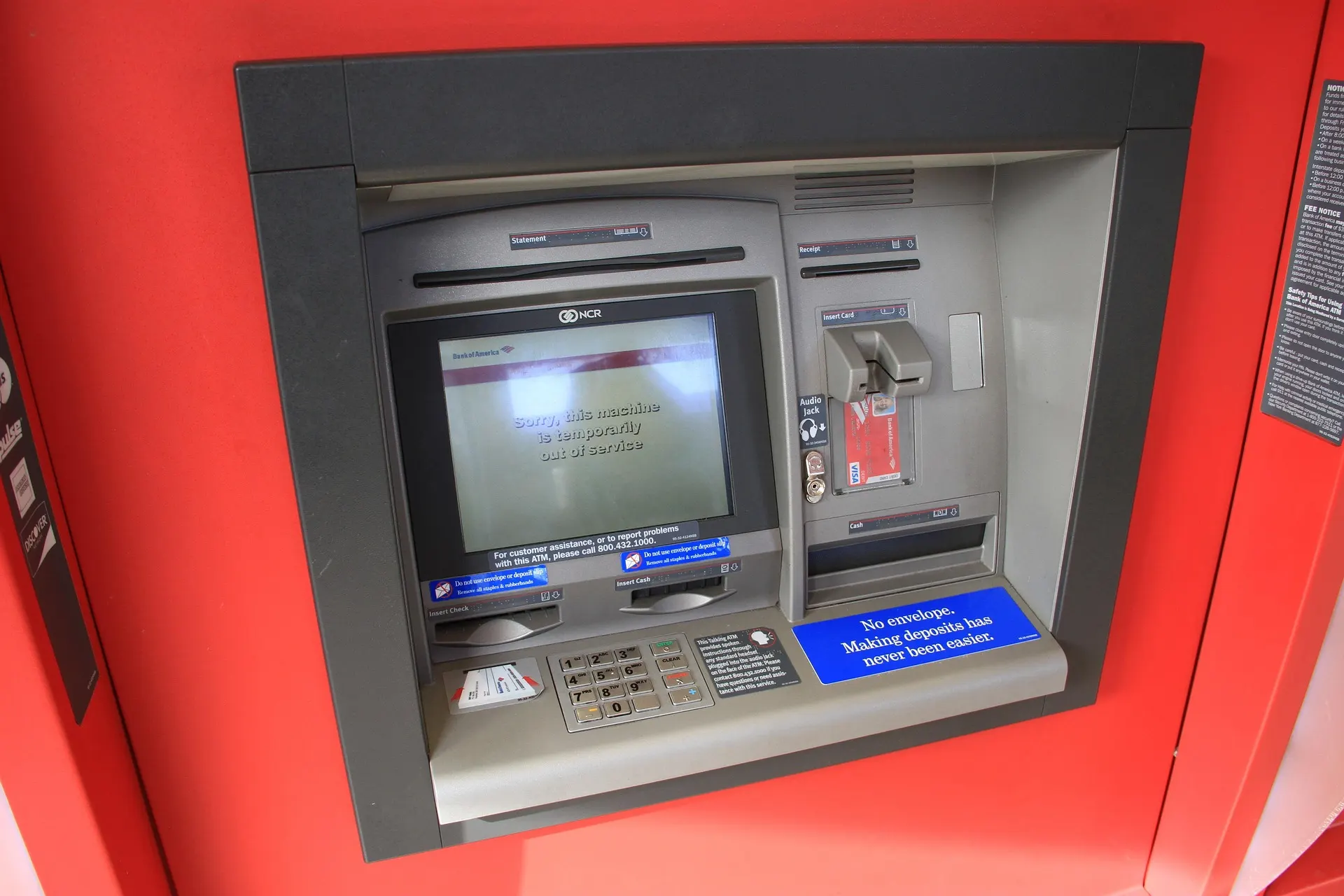
Crypto ATMs in Japan
Where the real machines are and how they work
Read more →
Web3 games and NFTs in Japan
From big publishers to NFT digital villagers
Read more →
P2P crypto in Japan
Legality, frozen-account risk and what is left
Read more →
Japan crypto tax guide
How miscellaneous income tax works, with yen examples
Read more →
Crypto in Tokyo
Exchange HQs, the Akihabara ATM, BTC-friendly venues
Read more →