Okinawa at a glance: what you can and can't do locally
None of Japan's 27 registered crypto exchanges has its head office in Okinawa; all are in Tokyo or Osaka. There is no crypto ATM on the islands. BTC Map, the community map of bitcoin-accepting places, lists a single Okinawa venue: Nagahama 88, a natural wine and craft sake shop in Yomitan that is tagged as taking Lightning payments, last confirmed by a contributor in July 2026. Nothing in Naha itself. Call ahead before you rely on any listing.
For residents that's not a problem, because Japanese exchanges run entirely online. For the large community connected to the US bases, though, the real question is not where to buy but whether you can open an account at all, and how your income is taxed. We cover that first, then FC Ryukyu Coin, banks, tax and the local Web3 scene.
Map: svg-maps/japan, CC BY 4.0
- Exchange offices
- None (all in Tokyo or Osaka)
- Crypto ATMs
- None
- BTC Map listings
- 1 (Yomitan)
- Local listed coin
- FC Ryukyu Coin (FCR) on GMO Coin
- Tax office
- Okinawa Regional Taxation Office, Naha
- Bank rule
- Ryukyu Bank refuses mismatched-name transfers to exchanges
If you're here under SOFA: accounts and tax
According to Okinawa Prefecture, roughly 70% of the land used exclusively by US forces in Japan is in Okinawa, on about 0.6% of the country's land area. Service members, the civilian component and their dependents live here under the US-Japan Status of Forces Agreement (SOFA), and that status changes two things that matter for crypto. A clear disclaimer first: this is general information, not legal or tax advice, and SOFA tax questions are genuinely technical.
Account opening. The Japanese government has stated in a formal answer to the Diet that SOFA members, the civilian component and their families are outside Japan's alien-registration system under Article IX of the agreement. In practice that usually means no residence cardZairyu card (在留カード): the ID card issued to foreign mid- to long-term residents. Japanese exchanges commonly accept it for identity checks.. Japanese exchanges verify identity through eKYCElectronic know-your-customer: you scan your ID and your face in the app instead of mailing documents. built around Japanese documents such as the My Number card, a Japanese driver's licence or a residence card, plus a registered Japanese address and phone number. If you have none of these, you may not get through. Ask the exchange's support team before you apply rather than finding out halfway through.
Tax. SOFA Article XIII says members, the civilian component and dependents don't pay Japanese tax on income they receive from their service with or employment by US forces. It also says this does not exempt them from Japanese tax on income from Japanese sources. Whether a gain on a Japanese exchange counts as Japanese-source income in your situation is exactly the kind of question to take to your installation's legal assistance office or tax center, and to a Japan-qualified tax accountant (zeirishi).
US reporting. US citizens are taxed by the US on worldwide income wherever they live, so crypto gains in Japan belong on your US return too. US rules for reporting foreign accounts (FBAR, Form 8938) have their own thresholds and definitions, and how they treat a crypto account at a Japanese exchange is something to confirm with a US tax professional. Our crypto for foreigners guide has a section on US persons.
Not everyone on Okinawa with a US passport is under SOFA
American teachers, contractors hired locally, students and family members who came on a regular visa are ordinary foreign residents. They hold residence cards, are counted in the 33,402 foreign residents figure, and use Japanese exchanges on the same terms as anyone else, including the CARF tax-residence self-certification that exchanges have asked for since January 2026.
FC Ryukyu Coin (FCR): Okinawa's own listed token
FC Ryukyu Coin was issued by Ryukyu Football Club Co., the Okinawa City company behind FC Ryukyu. In 2022 it was sold through an IEOInitial exchange offering: a new token sold to the public through a registered exchange after that exchange has screened the project. on GMO Coin and listed straight afterwards, which makes it a rare case of a regional sports club's token trading on a registered Japanese exchange. The numbers below come from GMO Coin's own disclosure documents.
| Item | Detail |
|---|---|
| Issuer | Ryukyu Football Club Co., Okinawa City |
| Total supply | 1,000,000,000 FCR, no further issuance planned |
| Sold in the IEO | 450,000,000 FCR (45%) at ¥2.2 each, ¥990 million in total |
| Application window | 27 April to 18 May 2022, lots of 2,500 FCR, allocated by lottery |
| Trading start | 18 May 2022, FCR/JPY on GMO Coin's spot order book |
| Issuer-side holdings | 350m FCR team holding unlocking 70m a year; 200m FCR team and adviser rewards |
The disclosure describes FCR as a "token partner" scheme: holders could receive FCR, have their name or logo on the club website, get home-game invitations or a uniform, send tokens to players, and vote on some club matters. NFT content and wider use in the Okinawan economy were listed as ideas under consideration.
To buy today you use GMO Coin's order book (取引所, torihikijo)Torihikijo (取引所): a market where users trade with each other at prices they set. Cheaper than the dealer desk, but you place limit orders., not its simpler dealer desk. GMO Coin's trading rules list FCR fees at −0.03% for makers and 0.09% for takers, with a minimum order of 10 FCR. Deposits and outbound transfers of FCR are free, with transfers from 500 FCR. See our GMO Coin review for account details.
Support the club, but size the risk
GMO Coin is the only Japanese exchange listing FCR, so liquidityHow easily you can buy or sell without moving the price. Thinly traded coins can swing hard. is thin, and the price was reported to have fallen well below the ¥2.2 sale price after listing. The issuer's own holdings unlock in stages by design. Treat FCR as a fan perk you can afford to lose, not a savings plan. Compare it with other homegrown coins on our Japanese cryptocurrencies page.
How to buy crypto from Okinawa
If you have a residence card and a registered address, the steps are the same as in Tokyo. Pick an exchange from our list of FSA-registered exchanges, verify your identity in the app (a My Number card read by NFC is fastest), declare your tax residence, and fund the account in yen.
Pay attention to which bank you use. GMO Coin's free instant deposits work from Japan Post Bank, PayPay Bank and docomo SMTB Net Bank. Okinawa's regional banks, including Ryukyu Bank, Bank of Okinawa and Okinawa Kaiho Bank, are not on that list, so from them you make an ordinary transfer and pay the bank's fee. Keeping a Japan Post Bank or online bank account for deposits avoids that. Our guide to ways to pay for crypto compares the options, and how to buy bitcoin in Japan walks through the screens, which are mostly in Japanese.
Ryukyu Bank and the name-match rule
In a notice dated 30 October 2025, Ryukyu Bank said it refuses transfers to crypto exchanges when the sender name differs from the account holder's name. Its examples allow your own name as is, or with numbers added in front; another person's name is refused.
This follows a February 2024 request from the National Police Agency and the FSA to bank associations nationwide, after investment scams routed victims' money into exchange accounts under other names. We could not find separate notices from Bank of Okinawa or Okinawa Kaiho Bank, but the request covered the whole industry, so assume the same logic. If your account name is in katakana and your exchange profile is in the alphabet, or you have a middle name one side leaves out, check with the exchange before sending. And if anyone you met online asks you to "deposit to this account", read our scams guide first.
Okinawa's Web3 scene: a city-backed summit and dev meetups
The clearest local-government link to Web3 in Okinawa is the Tourism × Web3 Summit 2026, held on 26–28 March 2026 at Sugar Hall, Nanjo City Culture Center. It was organised by the Japan Web3 Tourism Association and co-organised by Nanjo City, DMO Nanjo and well f.m. According to the organiser, the programme included the final of the Japan Tourism NFT Awards 2025 on 27 March and a hands-on NFT collecting session, with field excursions on the last day.
For builders, two venues host regular blockchainA shared, tamper-resistant ledger copied across many computers. Bitcoin and other crypto-assets run on blockchains. study sessions announced on Connpass. CODE BASE OKINAWA in Ginowan ran a monthly series on the Sui blockchain from August to November 2025, from "learn blockchain with Sui" to building a first dapp, and hosted the NEMTUS community's "touch the blockchain" session in July 2025. SAKURA innobase Okinawa in Naha's Matsuyama district hosted a NEMTUS session in May 2025 and the Okinawa Open Laboratory's forum on blockchain, NFTs and trust on 23 October 2025, with 41 people registered. These are mostly in Japanese and aimed at learning rather than trading. We found no bitcoin-specific meetup. Japan-wide dates are in our events calendar.
Tax: the Okinawa Regional Taxation Office
Japan's tax offices are grouped under 11 regional taxation bureaus, but Okinawa has its own: the Okinawa Regional Taxation Office, in the Okinawa National Tax Building at 9 Asahi-machi, Naha (tel. 098-867-3601). You still file with the tax office for your home address, and e-Tax lets you do it online.
For ordinary residents the national rules apply. Crypto gains are usually miscellaneous incomeZatsu shotoku (雑所得): the catch-all income category, added to your salary and taxed at progressive rates up to about 55% with resident tax., taxed with your salary at 5–45% plus 10% resident tax. Swapping coins and paying with crypto count as disposals, not just cashing out. Salaried workers with one employer and no more than ¥200,000 of other income can skip the national return but still need to declare for resident tax. A flat 20.315% rate for qualifying crypto is law but starts in 2028 at the earliest. Details are in our Japan crypto tax guide and 20% reform explainer; if you are leaving Japan after a posting or contract, read moving to or leaving Japan with crypto.
Visiting Okinawa: spending crypto as a tourist
Short-term visitors can't open Japanese exchange accounts, and there is no crypto ATM to turn coins into yen. The practical options are a crypto-linked Visa or Mastercard from your home country, used wherever cards are accepted, or converting at home before you fly.
Since 30 September 2026, overseas Binance Pay users can also scan PayPay QR codes at participating PayPay merchants across Japan through a cross-border QR scheme, with the shop paid in yen. It is an inbound-tourist feature; Japan residents can't use it. More on that in where to spend crypto in Japan, and if your trip goes through Tokyo or Osaka, the crypto ATM guide lists the real machines.
Crypto in Okinawa: FAQ
Can US military members in Okinawa open a Japanese crypto exchange account?
It depends on your documents. People under SOFA status are outside Japan's alien-registration system and usually have no residence card, which is one of the IDs Japanese exchanges rely on. Ask the exchange's support team before applying, and ask your installation's legal or tax office about the tax side.
What is FC Ryukyu Coin?
FCR is a crypto-asset issued by the company that runs FC Ryukyu, Okinawa's J.League football club. It was sold through an exchange offering on GMO Coin in 2022 at ¥2.2 per coin and trades as FCR/JPY on GMO Coin's order book.
Is there a bitcoin ATM in Okinawa?
No. We found no crypto ATM anywhere in Okinawa. The only verified machines in Japan are in Tokyo and Osaka.
Do SOFA personnel pay Japanese tax on crypto gains?
SOFA Article XIII exempts members, the civilian component and dependents from Japanese tax on income from their service with US forces, but not on income from Japanese sources. How crypto gains fit into that is a technical question; ask your installation's tax center and a Japan-qualified tax accountant.
Why was my Ryukyu Bank transfer to an exchange refused?
Ryukyu Bank refuses transfers to crypto exchanges when the sender name differs from the account holder name. Send from your own account and keep your name as it appears on the account; adding the exchange's numeric code is fine.
Where do Okinawa residents file crypto taxes?
At the tax office for their home address, usually via e-Tax. Okinawa's tax offices sit under the Okinawa Regional Taxation Office in Naha rather than one of the 11 regional taxation bureaus.
Sources
- GMO Coin: FC Ryukyu Coin sale and handling disclosure (JA)
- GMO Coin: FC Ryukyu Coin sale results disclosure (JA)
- FSA: Register of crypto-asset exchange service providers (JA)
- Ryukyu Bank: transfers to crypto-asset exchanges (30 Oct 2025, JA)
- House of Representatives: government answer on SOFA personnel and alien registration (JA)
- MOFA: US-Japan SOFA, Article XIII (JA)
- Okinawa Prefecture: overview of the US base issue (JA)
- Okinawa Regional Taxation Office (JA)
Keep reading
Crypto for foreigners in Japan
Visas, residence cards, US persons and tourists
Read more →
Japanese cryptocurrencies
JASMY, Astar, Oasys, Monacoin and more
Read more →
GMO Coin review
Instant deposits from Japan Post Bank, free withdrawals
Read more →
Moving to or leaving Japan with crypto
Residency status, exit tax and closing accounts
Read more →
Japan crypto tax guide
How miscellaneous income tax works, with yen examples
Read more →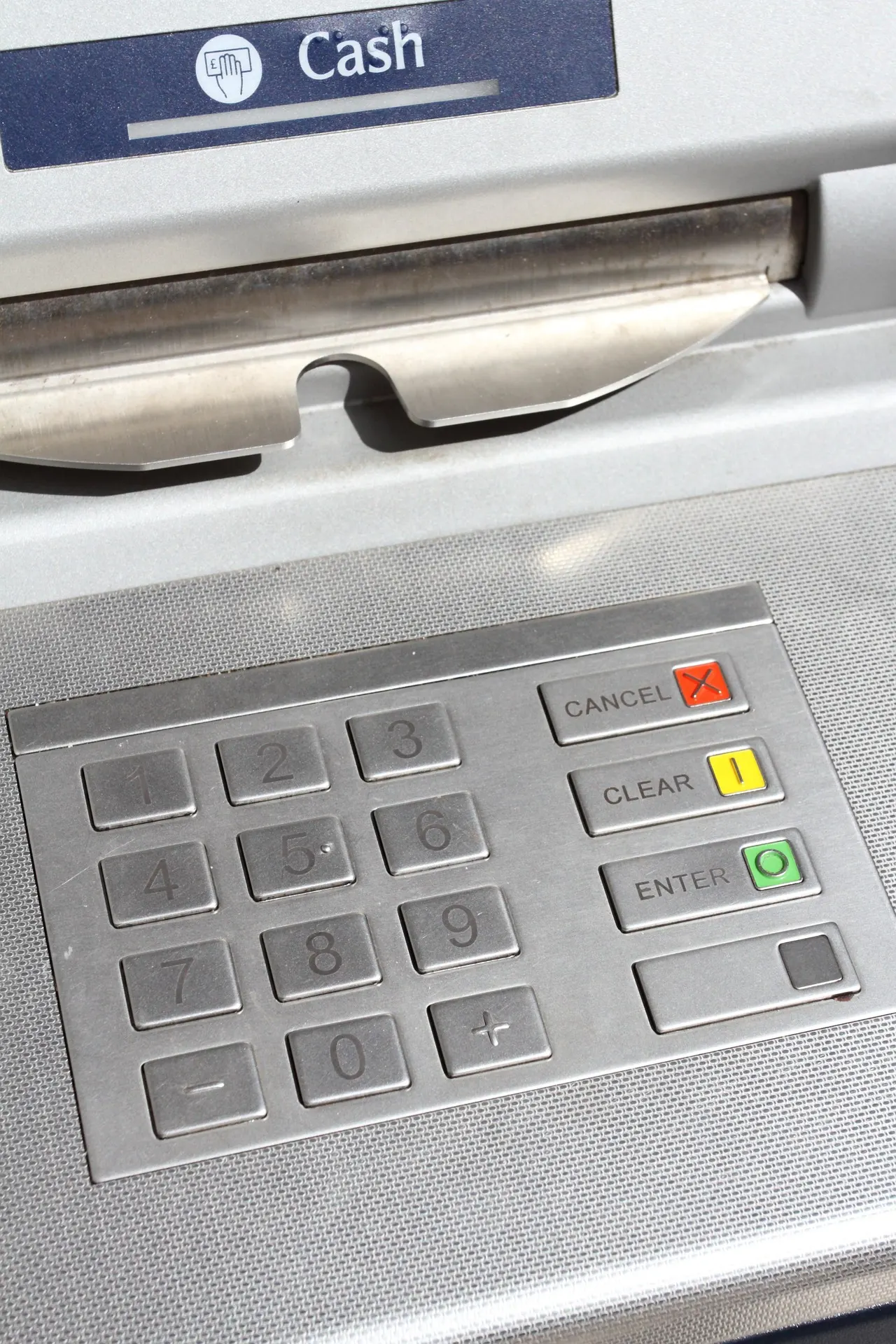
Crypto in Yokohama & Kanagawa
Local bank rules and accounts for US residents
Read more →